
Poor posture and back pain: what problems can it cause?
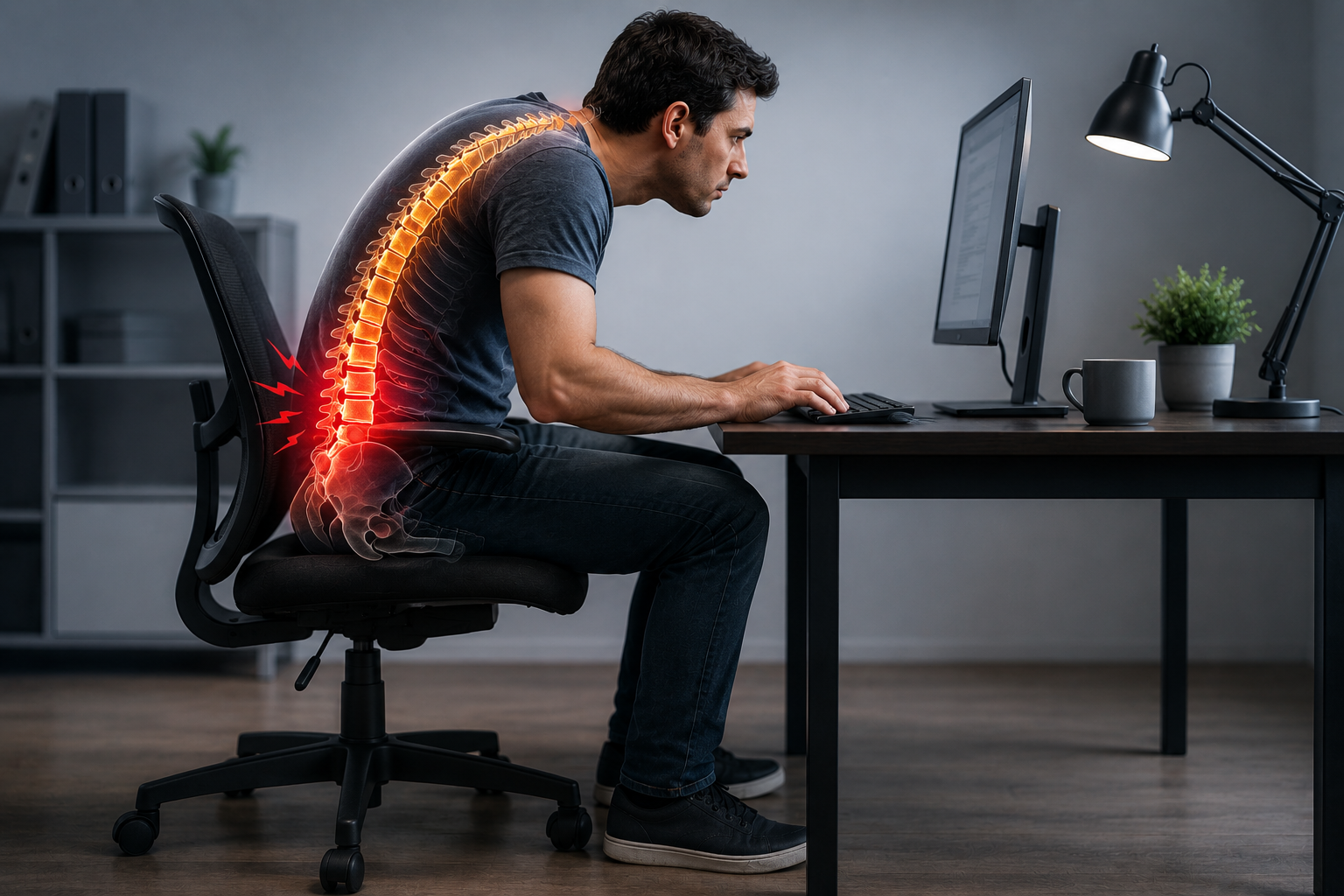
Spending several hours in front of a computer, using your phone constantly or holding a poor posture for a long time can cause discomfort in the back, neck and shoulders.
Although poor posture is not on its own the cause of all herniated discs or spine problems, holding uncomfortable positions for long periods can increase strain on the muscles, joints and structures of the spine, making some symptoms more likely to appear or get worse.
That is why adopting good habits at work and taking active breaks can help take care of your spine.
What can poor posture cause?
Holding a poor posture for many hours can contribute to:
Neck and back pain.
Muscle knots and tension.
Stiffness when getting up after sitting.
Shoulder pain.
Headaches related to muscle tension.
Tingling or discomfort in the arms and hands in some cases.
Greater overload on certain joints and structures of the spine.
When this discomfort lasts for a long time, it can affect mobility and quality of life.
Can poor posture cause wear or herniated discs?
The relationship between posture and spine problems is more complex than it seems.
Herniated discs and spinal wear can be related to different factors, such as age, genetics, excess weight, injuries, repetitive strain and natural degenerative changes.
Poor posture held for long periods can increase the load and strain on certain structures, so it can contribute to discomfort appearing or getting worse, but this does not mean that poor posture will necessarily cause a herniated disc.
For this reason, it is important to consider all the factors and not blame every back pain on posture alone.
Working many hours at the computer
One of the most common problems happens when sitting for several hours without changing position.
When working at a computer, it is advisable to:
Keep your back supported by the backrest.
Keep your feet flat on the floor.
Place the screen roughly at eye level.
Keep your shoulders relaxed.
Avoid getting too close to the screen.
Keep your arms in a comfortable position when using the keyboard and mouse.
Avoid staying in the same position for hours.
Good posture does not mean staying completely rigid. Even a proper posture can cause discomfort if it is held without movement for too long.
Get up and stretch during the day
One of the best recommendations for people who work many hours sitting down is to take active breaks.
Every so often, get up from your chair, walk for a few minutes and make gentle movements with your neck, shoulders, back and legs.
Stretching can help reduce the feeling of stiffness and muscle tension.
You do not need a long routine: a few minutes of movement several times during the day can be more useful than sitting for hours without changing position.
If an exercise causes severe pain, tingling or loss of strength, stop it and consult a specialist.
Your phone can also affect your posture
Using your phone for long periods can lead you to keep your head tilted forward for a long time.
This position can increase tension in the neck and shoulder muscles and lead to discomfort colloquially known as "text neck".
To reduce this overload:
Avoid holding the phone too low for long periods.
Try to raise it to a more comfortable position.
Change position often.
Take breaks during prolonged use.
When should you see an orthopedic surgeon?
Not every back pain needs immediate specialist care. However, it is advisable to get an evaluation if the pain:
Lasts for several weeks.
Interferes with your daily activities.
Becomes progressively more intense.
Comes with tingling or loss of sensation.
Causes weakness in the arms or legs.
Spreads to an arm or leg.
Appears after a fall or accident.
Significant loss of strength, difficulty walking or changes in bladder or bowel control require urgent medical evaluation.
Taking care of your posture also means moving
Keeping good posture is important, but movement is just as necessary.
Exercising regularly, strengthening the abdominal and back muscles, maintaining a healthy weight and avoiding sitting for long periods can help keep the spine stronger and more functional.
There is no perfect posture to hold all day long. The most important thing is to avoid staying in the same position for too long and get used to moving often.
Conclusion
Long days at the computer and poor postural habits can lead to pain, stiffness and muscle tension. Although poor posture is not the only cause of spinal wear or herniated discs, reducing the time spent in uncomfortable positions and taking active breaks can help protect the health of your spine.
Small changes, such as getting up periodically, stretching, setting up your workspace properly and staying physically active, can make a big difference.
If the pain persists, gets worse or comes with neurological symptoms, consult an orthopedic surgeon to determine its cause and receive the appropriate treatment.